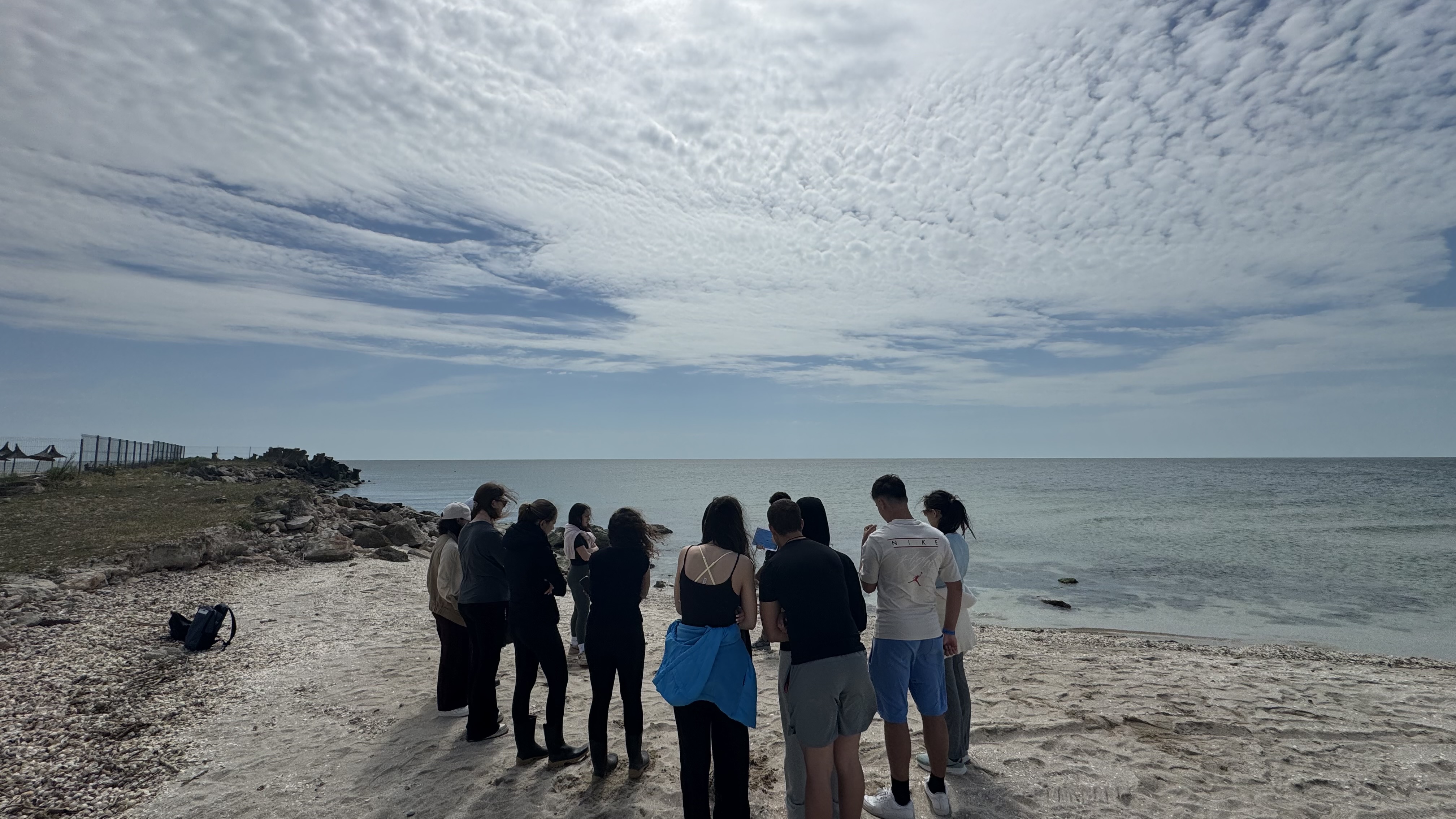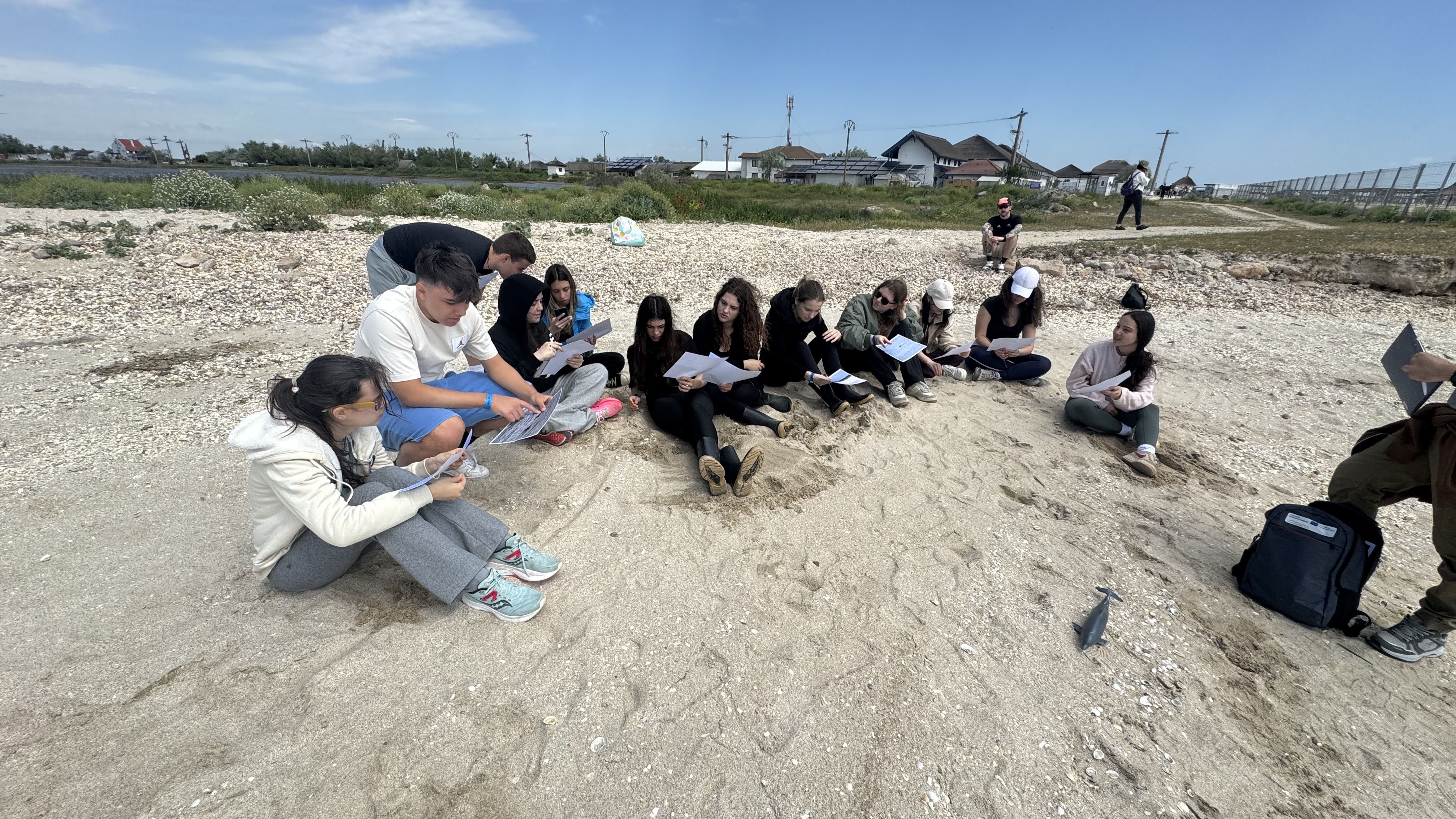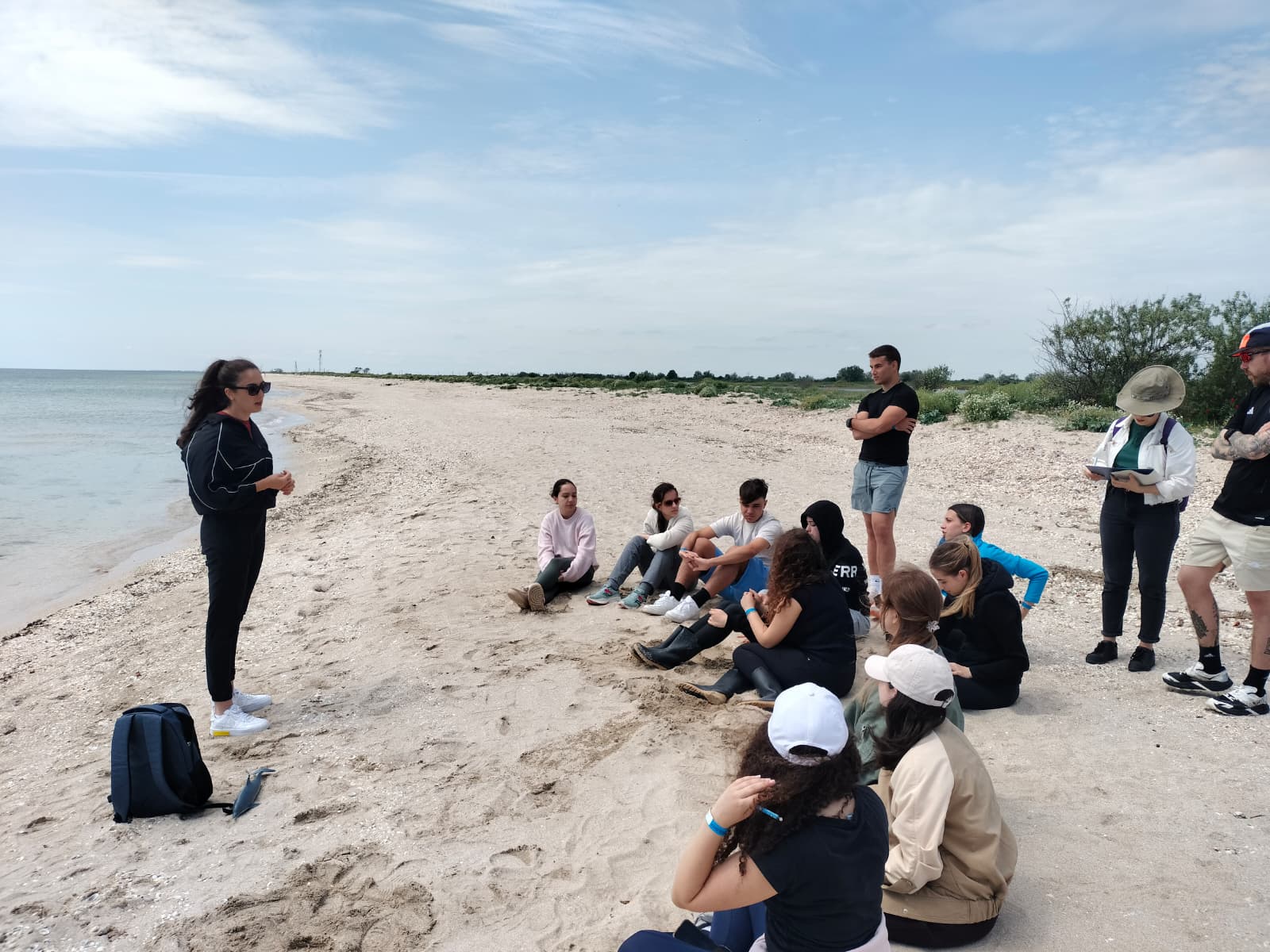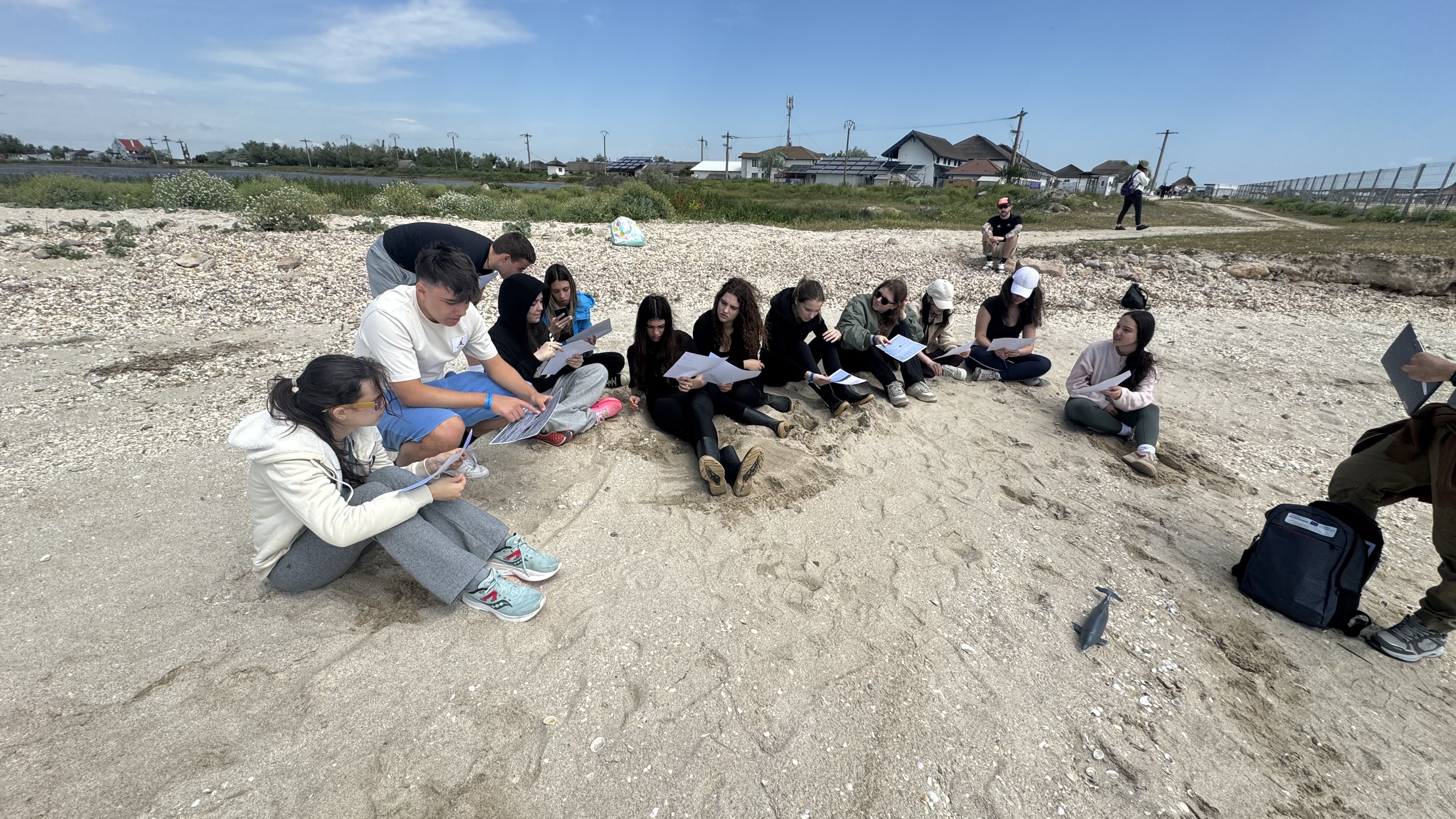
On May 23, 2026, Mare Nostrum (MN) organised an educational workshop at Gura Portiței Beach in Tulcea, Romania, focusing on Black Sea biodiversity and the conservation of marine mammals. The activity brought together 14 high school students and combined classroom-style learning with practical field observations.
The workshop introduced students to the relationships within the marine food web and the role of marine mammals in the Black Sea ecosystem. Through direct observation activities, participants were encouraged to explore their surroundings and become familiar with some of the basic methods used in biodiversity monitoring.
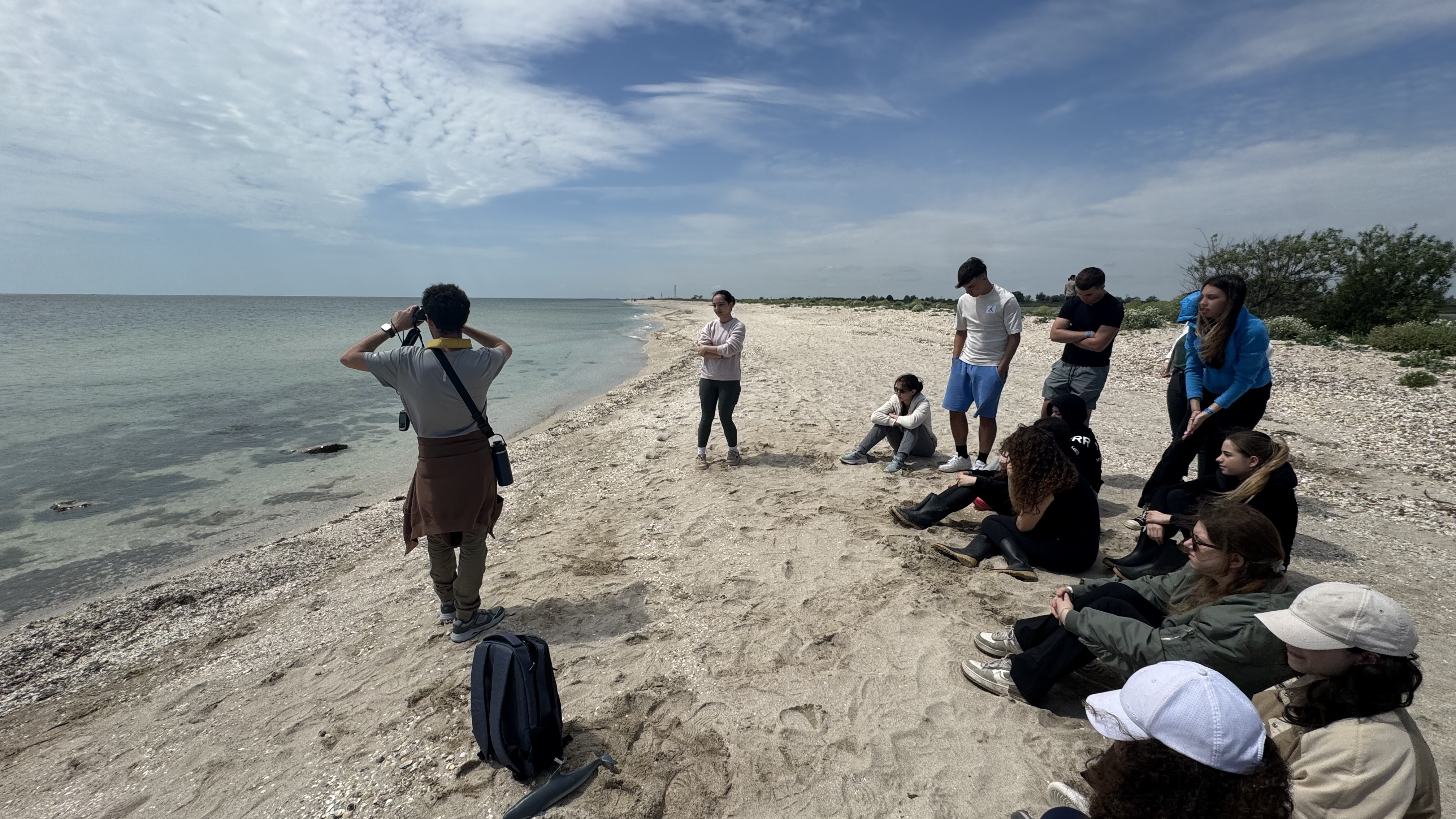
As part of the field activities, students used binoculars and GPS devices to look for signs of dolphin presence. This practical exercise gave participants an opportunity to understand how observations can be used to identify and monitor marine species in their natural environment.
Another important part of the workshop focused on the dolphins found in the Black Sea. Students examined a three-dimensional dolphin model developed within the project and learned to distinguish the three dolphin species occurring in the Black Sea based on their morphological characteristics.
The workshop helped students develop a better understanding of Black Sea cetaceans and the importance of their conservation by combining field observation, interactive learning and the use of educational models. The activity also provided an opportunity for young participants to see how biodiversity monitoring can support the protection of marine species.