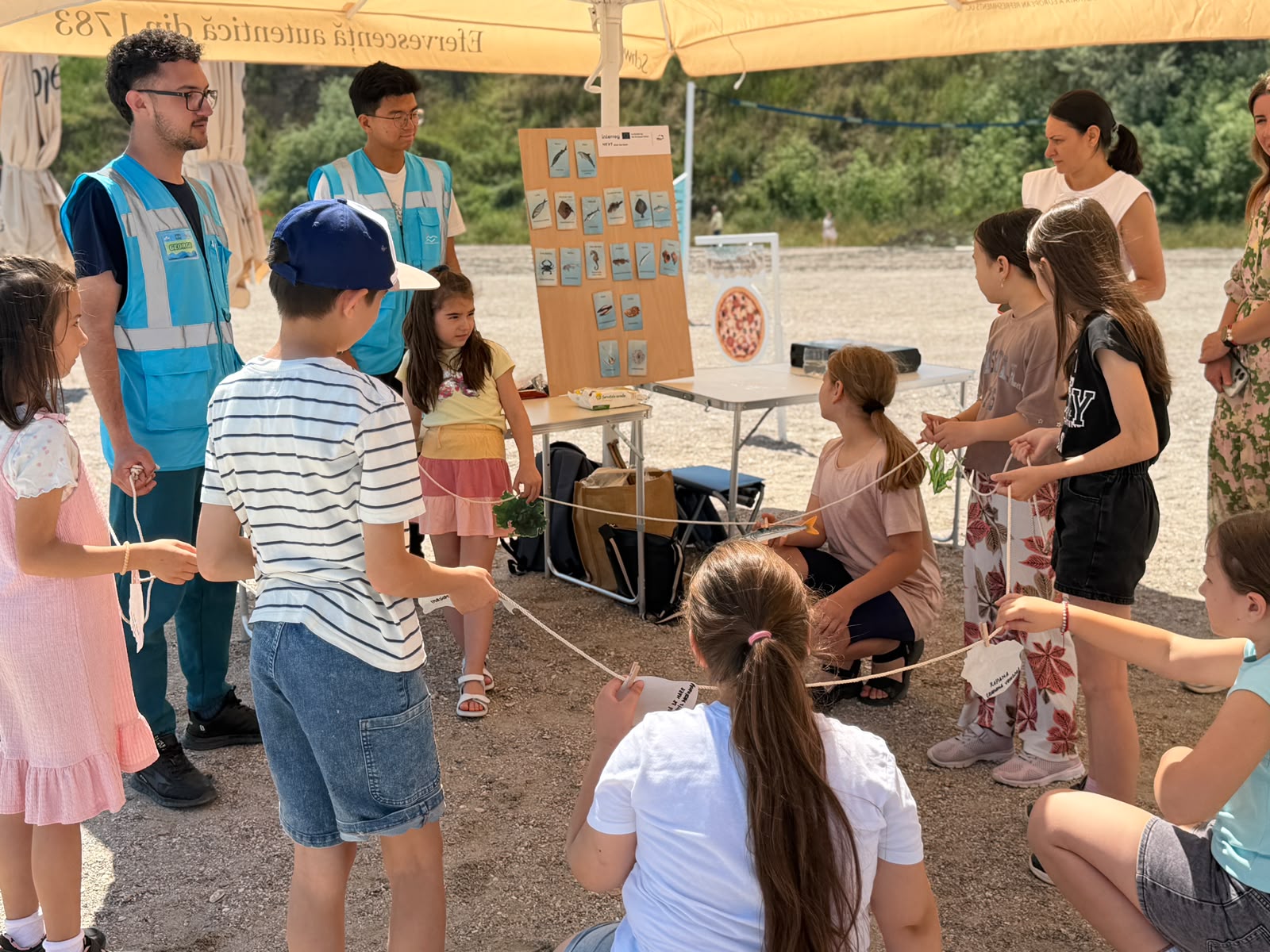
On June 3, 2026, Mare Nostrum (MN) organised an educational workshop at Agigea Beach in Constanța, Romania, bringing Black Sea biodiversity and environmental protection closer to 7 primary school students through hands-on activities.
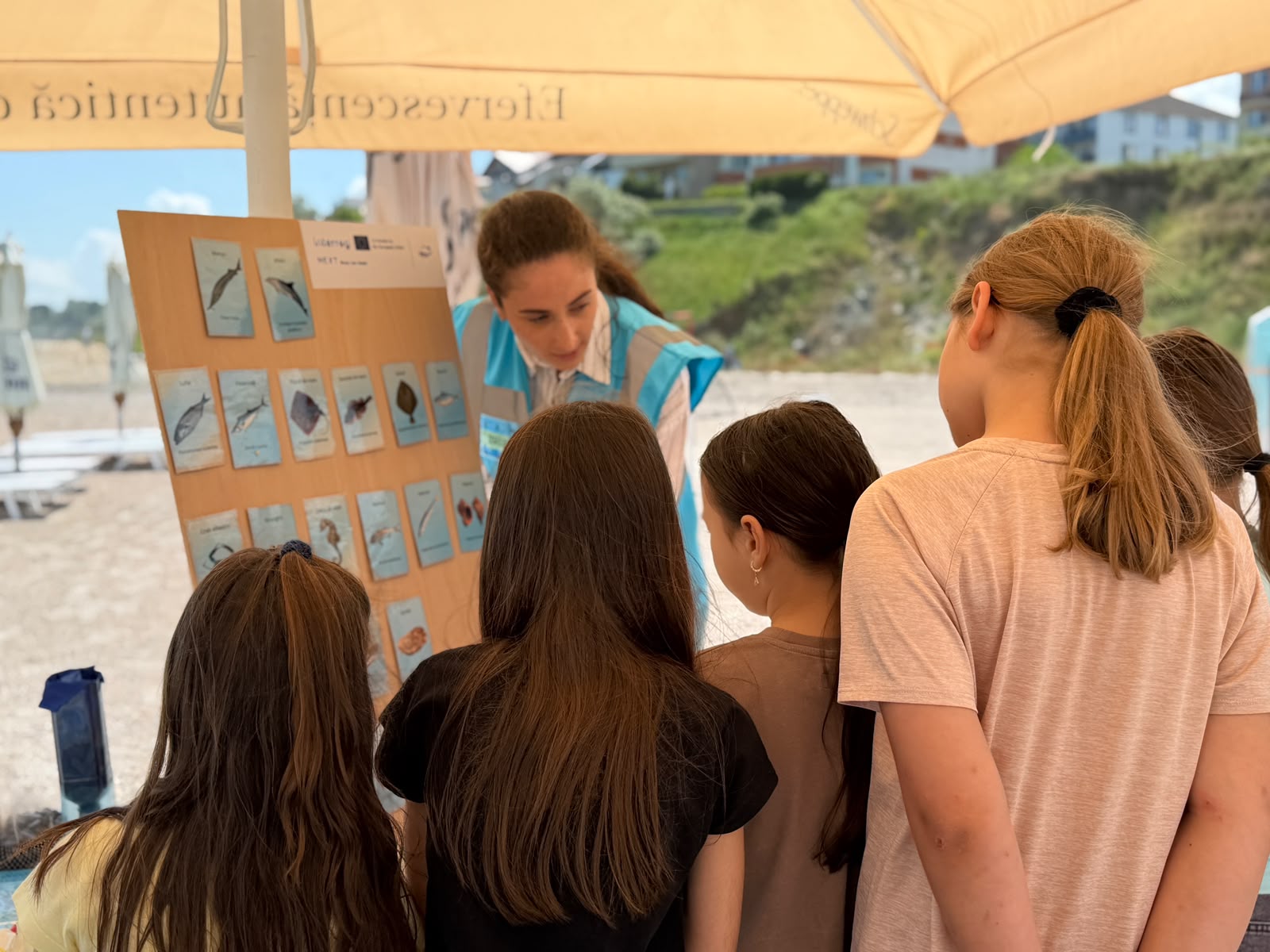
The workshop was designed to help children understand the relationships between marine organisms and the way marine ecosystems function. One of the main activities involved building a trophic pyramid using a wooden board and illustrated cards representing characteristic marine species. Through this activity, participants explored different trophic levels and learned about energy transfer within the marine ecosystem.
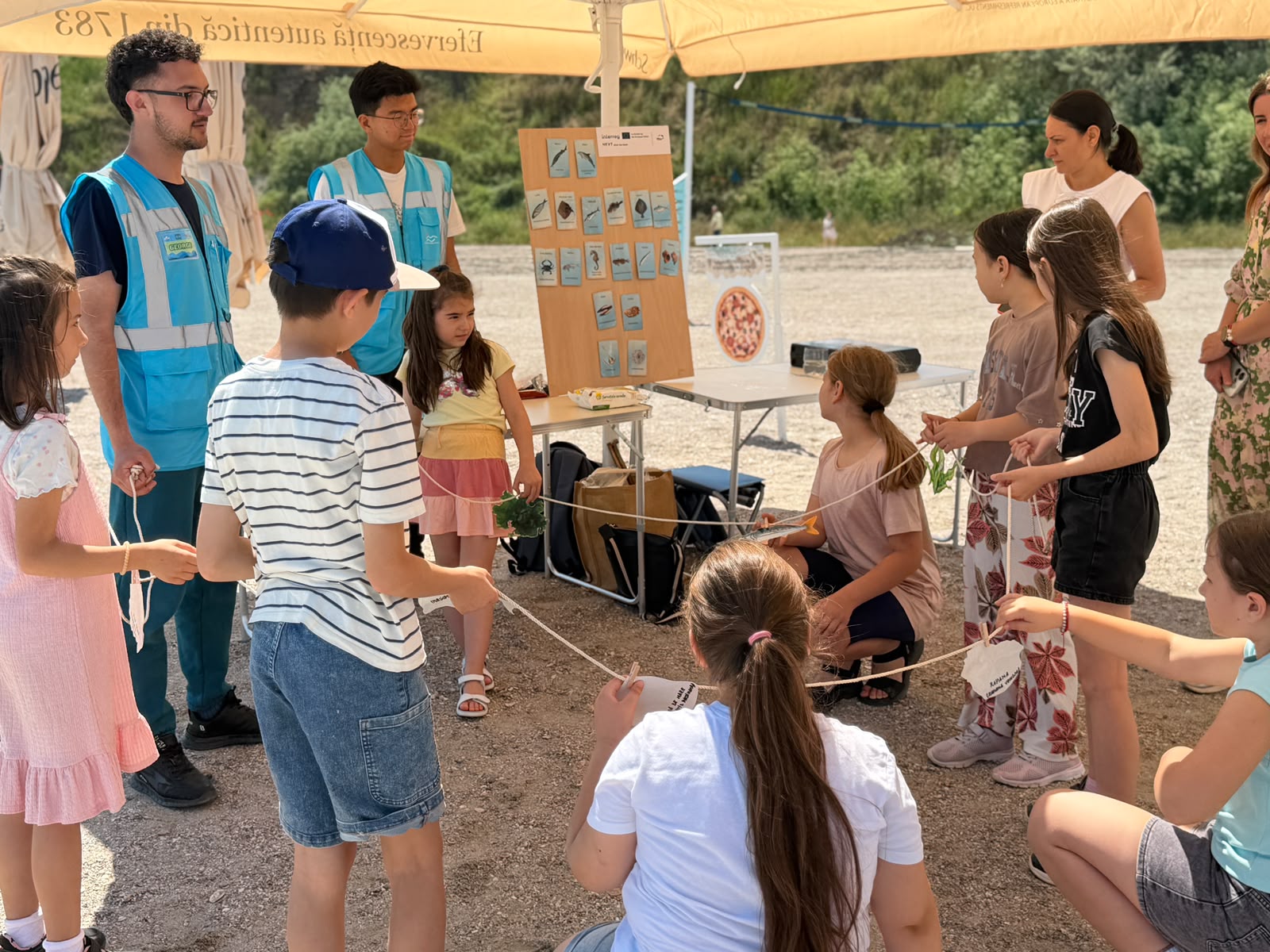
The children also took part in a role-playing activity in which they represented different marine species. Using a rope, they created a food chain and explored the interdependence between organisms, while also learning about the role of abiotic factors in the marine environment.
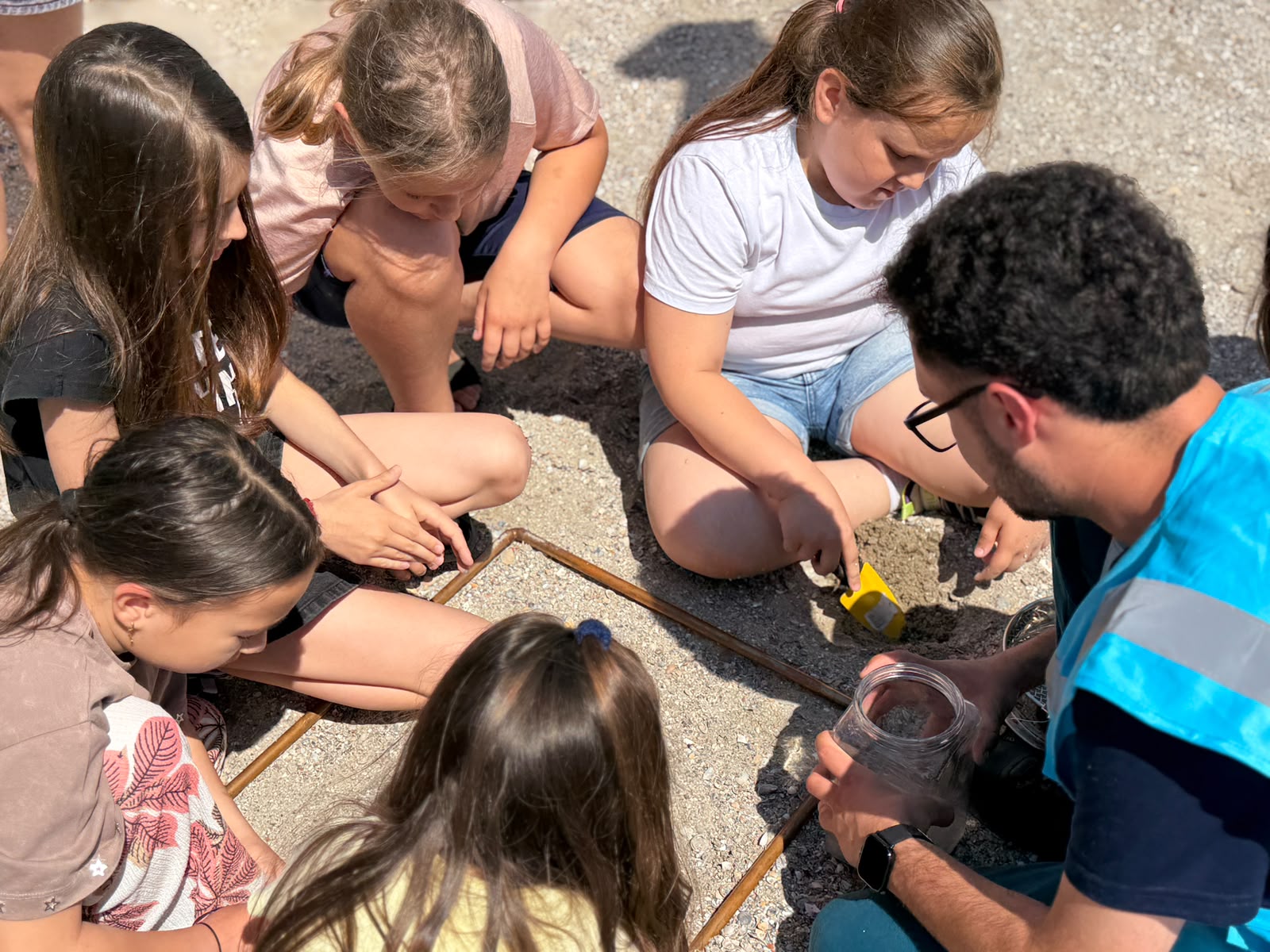
The workshop also addressed one of the important environmental pressures affecting marine ecosystems: microplastic pollution. Using a sieving kit, participants examined sand and identified plastic fragments, helping them understand how small plastic particles can affect marine biodiversity.
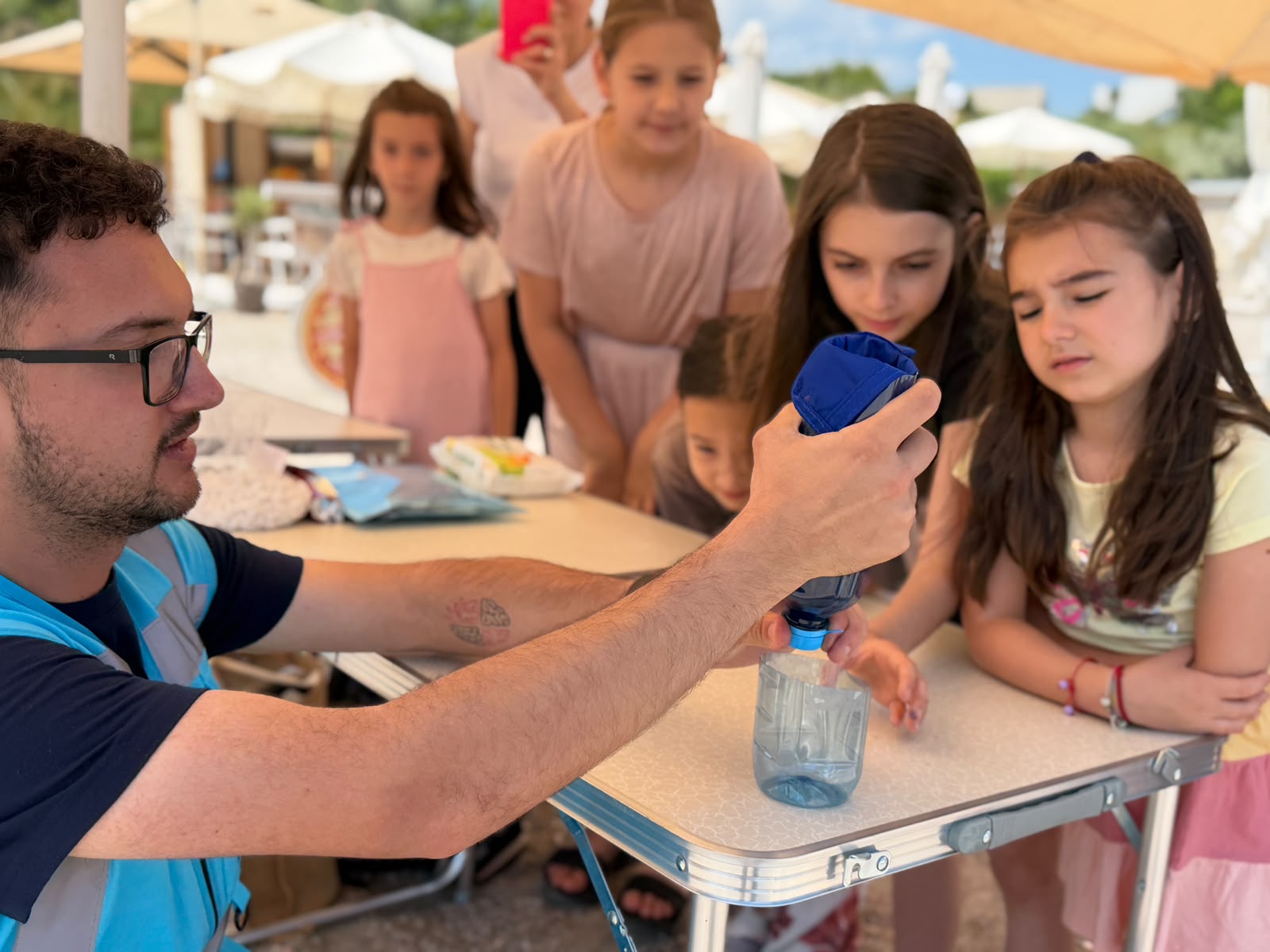
In another practical activity, the children constructed a natural water filter using simple materials. Through this experiment, they were introduced to the basic principles of filtration and discussed why clean water is essential for ecosystems as well as for human well-being.
The workshop provided children with an engaging introduction to Black Sea biodiversity and environmental protection by combining games, experiments and practical learning.